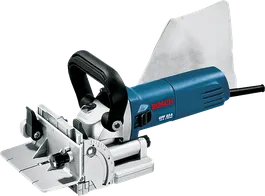
A biscuit joiner is a woodworking tool that cuts matching slots into two workpieces so compressed wood biscuits and glue can be inserted for a strong, hidden joint. The small side milling cutter ensures precise slotting, and after clamping you get a clean, durable connection ready for finishing. Professionals choose biscuit joinery for fast setup, accurate alignment, and a neat surface with minimal visible fixings, making it ideal for furniture, cabinetry, and interior construction compared to simple butt joints, nails, or screws.
 Your selection is
 being processed
1
The Bosch Biscuit Joiner is ideal for precise routing of grooves for corner and edge joints with biscuit dowels – with precise, tool-free routing depth setting, angle guide with clearly legible scale and grid for even more accurate work.
BISCUIT JOINERS - FAST, ACCURATE PANEL JOINERY ON ANY JOBSITE
HOW DOES BISCUIT JOINERY WORK?
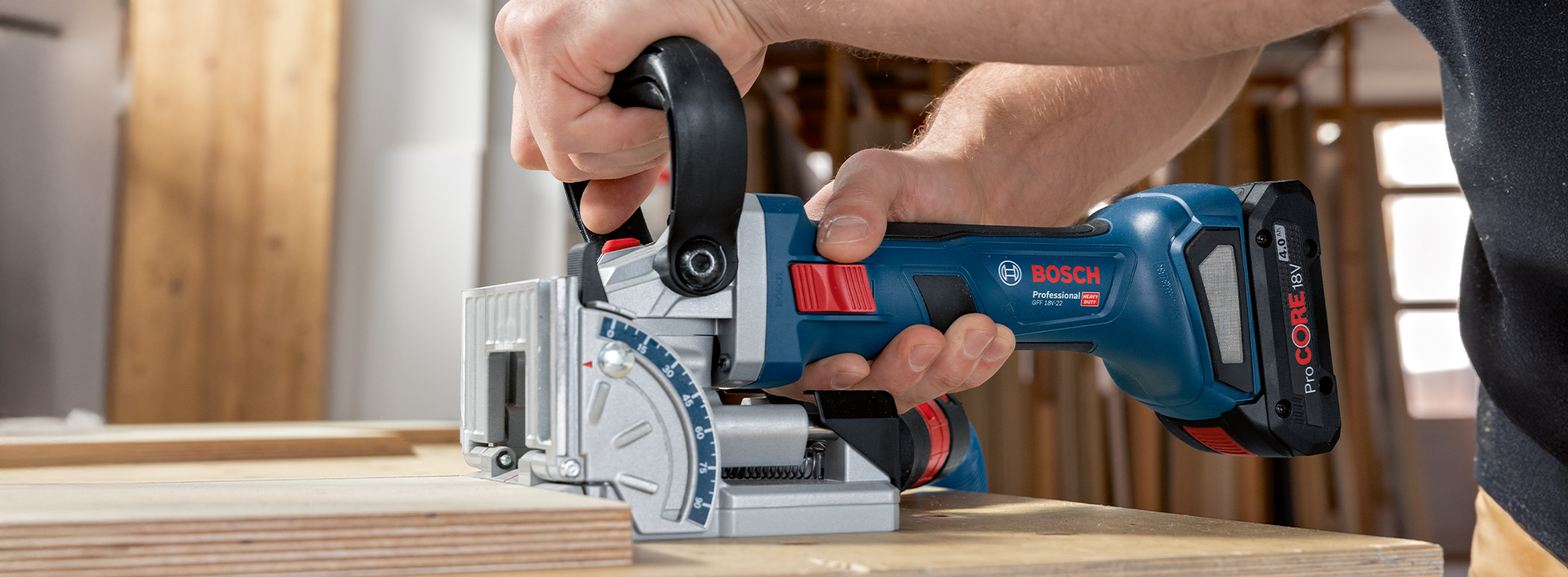
A plate joiner works in a few simple, repeatable steps:
- Marking the joint
Mark matching reference lines across both workpieces. These lines define the biscuit position and help avoid misalignment. - Cutting the slots
You place the fence on the workpiece, align the center mark with your pencil line, and plunge the rotating blade into the edge. The cordless biscuit joiner cuts a shallow, oval slot sized for a specific biscuit. - Inserting biscuits and glue
You apply wood glue into each slot and on the joint surface, then insert dry biscuits. The compressed beech or composite biscuits absorb moisture from the glue and begin to swell. - Clamping the assembly
Bring the pieces together, clamp along the joint line, and let the glue cure. The swollen biscuits improve alignment and increase joint strength without visible fasteners.
BISCUIT SIZES, MATERIALS AND COMPATIBILITY
Standard biscuit sizes allow you to match the joint to your material and load:
- #0 – for narrow rails, thin panels, and smaller frames
- #10 – for medium-width boards, shelves, and general furniture
- #20 – for wide boards, tabletops, and high-load joints
Special biscuits and connectors are also available for hinges, panel connectors, or knock-down fittings, depending on your biscuit joinery system.
You can use a wood biscuit joiner with many board types:
- Solid softwood and hardwood
- Plywood and birch ply
- MDF and HDF
- Laminated and composite panels
Very thick timber, end-grain joints, or moisture-sensitive materials may require alternative joinery methods or additional reinforcement.
WHAT MAKES CORDLESS BISCUIT JOINERS SO EFFECTIVE?
Powerful 18V cordless plate joiners
Modern cordless biscuit joiners use high-performance 18V battery packs that deliver consistent cutting power for slotting hardwoods, dense panels, and long glue lines. Within the you can use the same batteries across multiple tools, which reduces downtime and total equipment cost.
Precise fence and depth settings
A high-quality biscuit joiner offers an adjustable fence for angle cuts, height adjustment for different board thicknesses, and depth stops for biscuit sizes #0, #10, and #20. These settings help you cut perfectly centered slots in flat joints, miters, and T-joints.
Clean working environment with dust extraction
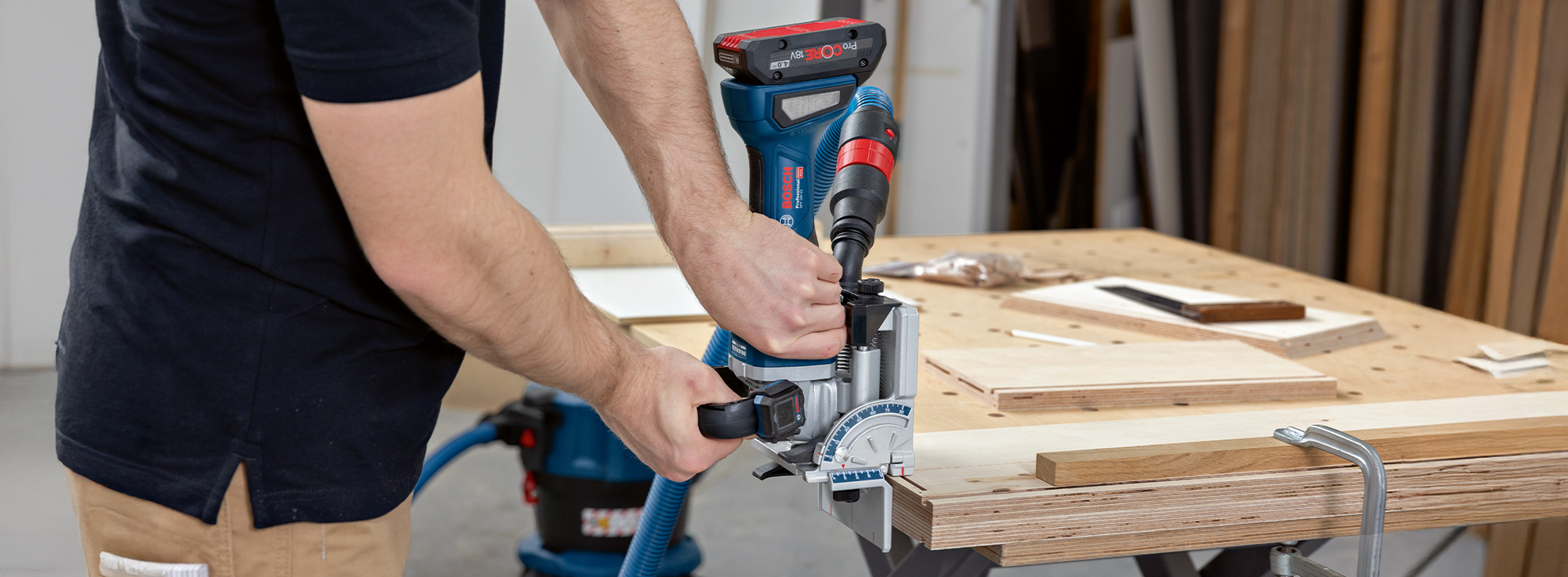
Integrated dust ports allow you to connect a vacuum for cleaner slots and a better view of the cut line. Effective dust extraction supports accuracy and reduces cleanup time, especially when working indoors on finished sites.
Ergonomic handling for all day use
A balanced body, rubberized grips, and intuitive switches make the cordless biscuit joiner easy to guide along edges and corners. Low vibration and compact dimensions help you work comfortably, even on larger panel assemblies or series production.
WHAT TYPES OF BISCUIT JOINERS CAN YOU CHOOSE FROM?
Compact cordless biscuit joiners
Lightweight and easy to maneuver, these models are ideal for fitting work, assembly on site, and smaller workshops. A compact cordless plate joiner fits into tight spaces and is perfect for kitchen installers, interior carpenters, and furniture builders working directly in the customer’s home.
Heavy duty panel joiners
More powerful models with robust base plates are designed for intensive cabinet production, shop fitting, and structural panel work. They handle wider boards, thicker tabletops, and long glue joints with consistent precision.
WHO BENEFITS FROM A BISCUIT JOINER?
A biscuit joiner is particularly useful for:
- Carpenters and joiners building furniture, stairs, and fittings
- Cabinetmakers and kitchen installers assembling carcasses and fronts
- Interior construction professionals working with MDF, panels, and cladding
- Serious DIY users who want professional quality joints and clean surfaces
For modern carpentry and interior work, a woodworking joiner helps you standardize your workflow, improve quality, and save time on sanding and rework.
WHAT SAFETY AND HANDLING ASPECTS SHOULD YOU CONSIDER?
A Bosch Professional biscuit joiner is designed for controlled cutting and precise plunges. To work safely and efficiently:
- Always wear eye and hearing protection, and use dust extraction where possible
- Check the blade condition regularly and replace dull blades
- Secure workpieces with clamps before cutting slots
- Set plunge depth and fence angle carefully to avoid cutting through faces
- Store biscuits dry and sealed so they do not swell before use
KEY QUESTIONS BEFORE CHOOSING A BISCUIT JOINER
* You can find more information about the deviations in the following link: