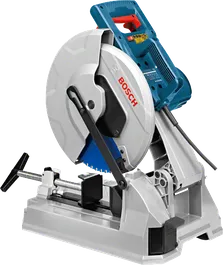
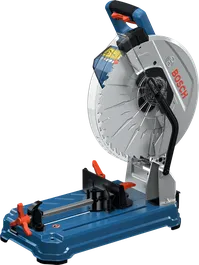

Cutting steel pipes or thick metal profiles with the wrong tool wastes time, ruins accuracy, and burns through blades. A professional metal cut off saw combines a strong motor, stable base, and controlled cutting motion. This allows you to cut tough materials such as steel, aluminum, or iron with confidence. Compared with handheld tools like an angle grinder, a cut off saw provides greater stability and repeatable accuracy.

Free gift with your purchase! Spend over £139 and get rewarded
METAL CUT-OFF SAWS: POWERFUL METAL CUTTING TOOLS FOR PROFESSIONAL RESULTS
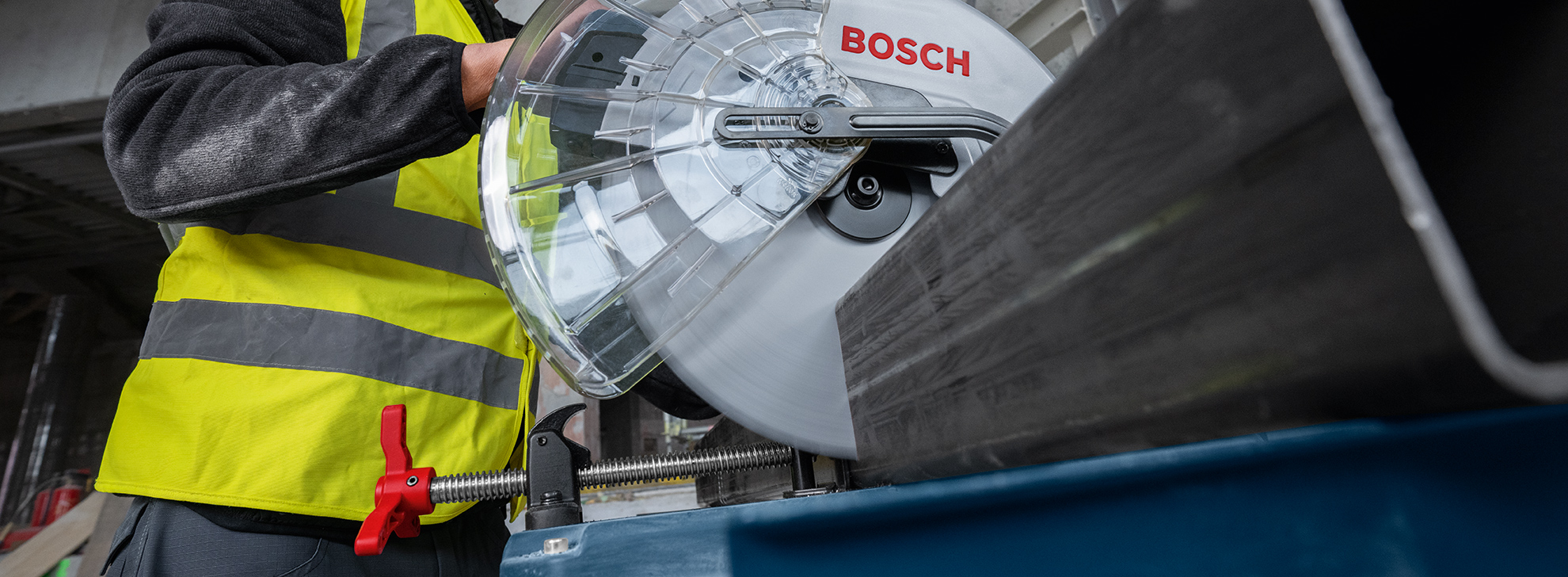
What is a metal cut-off saw and what is it used for?
A metal cut-off saw is a semi-stationary saw designed for fast, controlled cross-cuts in metal and other rigid materials. The operator lowers the spinning blade vertically into a secured workpiece that is held in place by a clamp system. This guided downward cutting motion allows precise cross-cuts and safe working conditions.
Typical uses include:
- Cutting steel pipes and metal tubes
- Trimming threaded rods and metal bars
- Preparing profiles for welding or fabrication
- Cutting reinforcement steel or rebar
- Construction and installation work
What types of metal cut-off saws exist?
Chop saws with abrasive disc
An abrasive chop saw uses an abrasive cutting disc to grind through metal. Instead of cutting with a saw blade, the abrasive wheel removes material through friction.
Key advantages include:
- Robust construction designed for jobsite conditions
- Durable abrasive discs that withstand heavy workloads
These machines are the most common type of metal cut-off saw used in construction and metalworking.
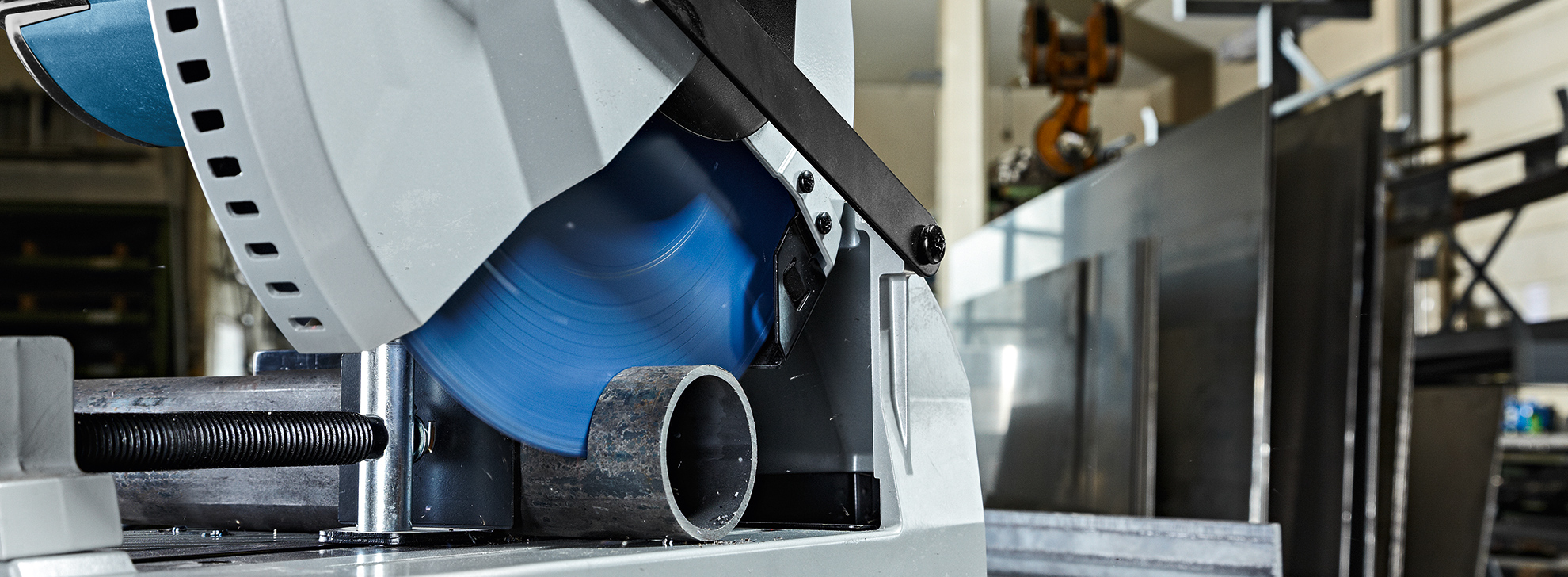
Dry cutter with carbide blade
A dry cutter uses specific saw blades. These saw blades cut the material rather than grinding through it.
Key benefits include:
- Cleaner cuts with fewer burrs
- Less heat generation
- Reduced sparks to increase safety
- Higher cutting precision
- Cutting depth stays constant
- Less fumes
- Fast cutting performance
Cold saws are commonly used where surface quality, precision, and safe working conditions are elementary.
What features matter when choosing a metal cut-off saw?
Blade size and cutting disc
Diameter of blade or disc directly influences the cutting capacity. Larger diameters allow deeper cuts and support thicker materials.
Typically, saws are available with diameters of 305 or 355 mm.
Common blade types include:
- Abrasive cutting wheels or discs
- Carbide-tipped saw blades specific for metal applications
- Carbide-tipped saw blades specific for stainless steel applications
ensures compatibility with the material you want to cut.
Motor power, RPM, and torque
Motor power determines how effectively the saw maintains speed during heavy cutting. High-performance motors provide consistent RPM even under load, ensuring smooth cutting and preventing overheating.
Cutting capacity
The cutting capacity describes the maximum size of material the saw can handle. This includes:
- Maximum cut depth
- Maximum pipe diameter
- Compatibility with bars, tubes, or angle profiles
Clamping system
A solid clamp secures the workpiece and prevents movement during cutting. Adjustable clamps also allow angle cuts and improve cutting accuracy.
Tool-less operation of clamp adjustments is available on some metal cut-off saws.
Portability and size
Most saws have a transport handle. Portable machines are compact and lighter but still deliver professional cutting performance. For full flexibility there are also cordless saws available.
What materials can a chop saw cut?
Common compatible materials include:
- Steel and stainless steel
- Aluminum and non-ferrous metals
- Iron and cast materials
Typical applications include metal fabrication, plumbing and HVAC installation, construction framing, automotive repair, and general workshop tasks.
Other cutting tools such as a , , or may be better suited for certain applications, for example in tight spaces, for specialized materials, or larger workpieces, but metal cut-off saws remain one of the most reliable tools for fast metal cutting.
How to choose the right metal cut-off saw for your needs?
Choosing the right tool depends on your working environment and cutting requirements.
First, match the saw type to your expectations. An abrasive chop saw is ideal for the occasional cut, while a dry cutter with sawblade provides cleaner cuts with fewer sparks among other advantages and therefore is the more professional tool.
Second, consider how frequently you use the tool. Occasional DIY users may only need a basic model, while professionals benefit from durable machines with stronger motors and improved clamping systems.
Third, evaluate portability. Jobsite work often requires a compact saw that can be transported easily, while workshop environments benefit from heavier machines with greater stability.
Finally, check cutting capacity and blade compatibility to ensure the saw can handle the pipe diameters, profiles, and materials used in your daily tasks.
How to choose the correct blade type?
The type of cut-off saw determines the blade type. For safety reasons, a saw blade for a dry cutter must not be used in an abrasive chop saw.
What safety and maintenance considerations are important?
Working with a metal cut-off saw involves potentially serious user risks in various aspects such as noise, sparks, chips, and sharp or hot materials, so proper safety practices are essential.
Always wear:
- Eye protection
- Hearing protection
- Protective gloves
The workpiece should always be secured with the vice, and protective guards must remain in place during operation.
Regular maintenance also helps maintain performance. This includes cleaning metal chips and dust, checking blade wear, and replacing damaged cutting discs.
Abrasive chop saws should be properly positioned in the workshop or jobsite so flying sparks cannot produce any fire hazard.
Professional performance you can rely on
Bosch Professional metal cut-off saws are built for demanding jobsite conditions where reliability and consistent cutting performance matter every day. With the right blade, stable clamping system, and sufficient motor power, a professional metal cut-off saw turns demanding metal cutting into a fast and repeatable process.
* You can find more information about the deviations in the following link:


